

Venues · Infrastructure
The Court Comes of Age: How Asia Is Upgrading Its Pickleball Venues
For two years, Asia played pickleball on borrowed ground. In 2026, the region is finally building courts of its own — and the upgrade is about far more than fresh paint.
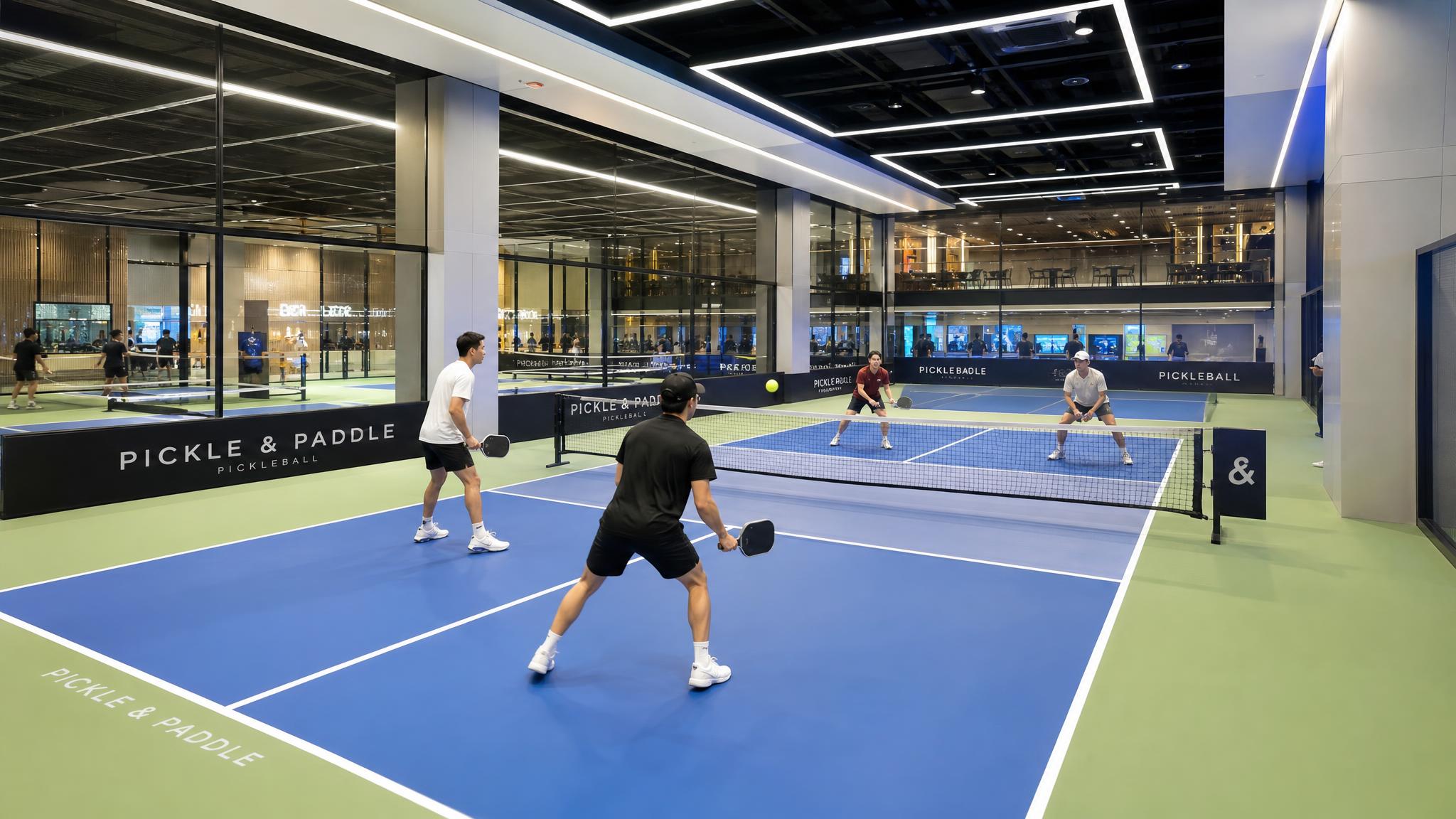
A new generation of purpose-built, climate-controlled courts is redefining what a pickleball venue means in Asia.
For the first two years of Asia's pickleball boom, the sport borrowed its space. Taped lines over tennis courts. Converted badminton halls. Empty retail floors with a net rolled in on weekends. It worked, because demand was so far ahead of supply that nobody cared about the surface underfoot.
That era is ending. In 2026 the question operators across the region are asking has shifted from "where can we put a court?" to "what makes a court worth coming back to?" — and the answers are reshaping what a pickleball venue looks like.
Climate control is no longer a luxury
In Southeast Asia, the single biggest venue upgrade isn't the surface — it's the air. Humidity and heat turn an outdoor session into a 30-minute ordeal. The wave of new indoor facilities opening across Singapore, Kuala Lumpur, Bangkok and Manila share one headline feature: fully air-conditioned play. Operators have learned that climate control is what converts a one-time novelty visit into a thrice-weekly membership.
From converted to purpose-built
The global trend — now arriving in Asia — is the move away from multi-use conversions toward purpose-built pickleball destinations. These blend the athletic and the social: cushioned acrylic or modular tile surfaces engineered for joint-friendly play, proper 20-foot ceilings, glare-free LED lighting, dedicated spectator seating, and — increasingly — a cafe or bar at the heart of the floor plan. The reference points are no longer tennis clubs. They're boutique fitness studios and social-entertainment venues.
The surface underneath matters more than it looks
Venue operators are discovering that surface choice is an ROI decision, not an aesthetic one. Key shifts in 2026:
- Cushioned systems over bare concrete — reduced injury risk keeps older, higher-spending members playing longer.
- Modular snap-together tiles — faster installs, easier maintenance, and the flexibility to reconfigure a floor overnight.
- Sustainable, long-life materials — lower resurfacing cost over a five-year horizon, which is where the real margins live.
The first wave of Asian pickleball was about access. The second is about experience.
What this means for the region
Here's the catch worth naming: venue standards are being set, venue by venue, with almost no shared playbook across borders. An operator in Jakarta solving for humidity and an operator in Seoul solving for ceiling height are learning the same lessons in isolation, often paying for the same mistakes twice.
This is exactly the kind of knowledge that should flow freely across Asia — what surfaces hold up in tropical humidity, which lighting specs cut glare on glossy courts, how to design a floor that's a gym by day and a social venue by night. The venues getting it right are quietly defining the regional standard. The rest of us just need a way to compare notes.
Help build the bridge.
Players, coaches, venues, brands, tournaments and travel partners across every Asian market are joining as founding partners.
Become a Founding Partner →Pickleball Asia is an independent grassroots community network, distinct from commercial pickleball news publications. Figures reflect publicly reported data as of late 2026.