

Technology · Innovation
Smart Paddle, Smarter Court: The Technology Reshaping Pickleball in 2026
The game that prided itself on simplicity is quietly becoming one of the most instrumented sports on earth. In 2026, the technology stopped being a novelty and started changing how pickleball is played, coached and judged.
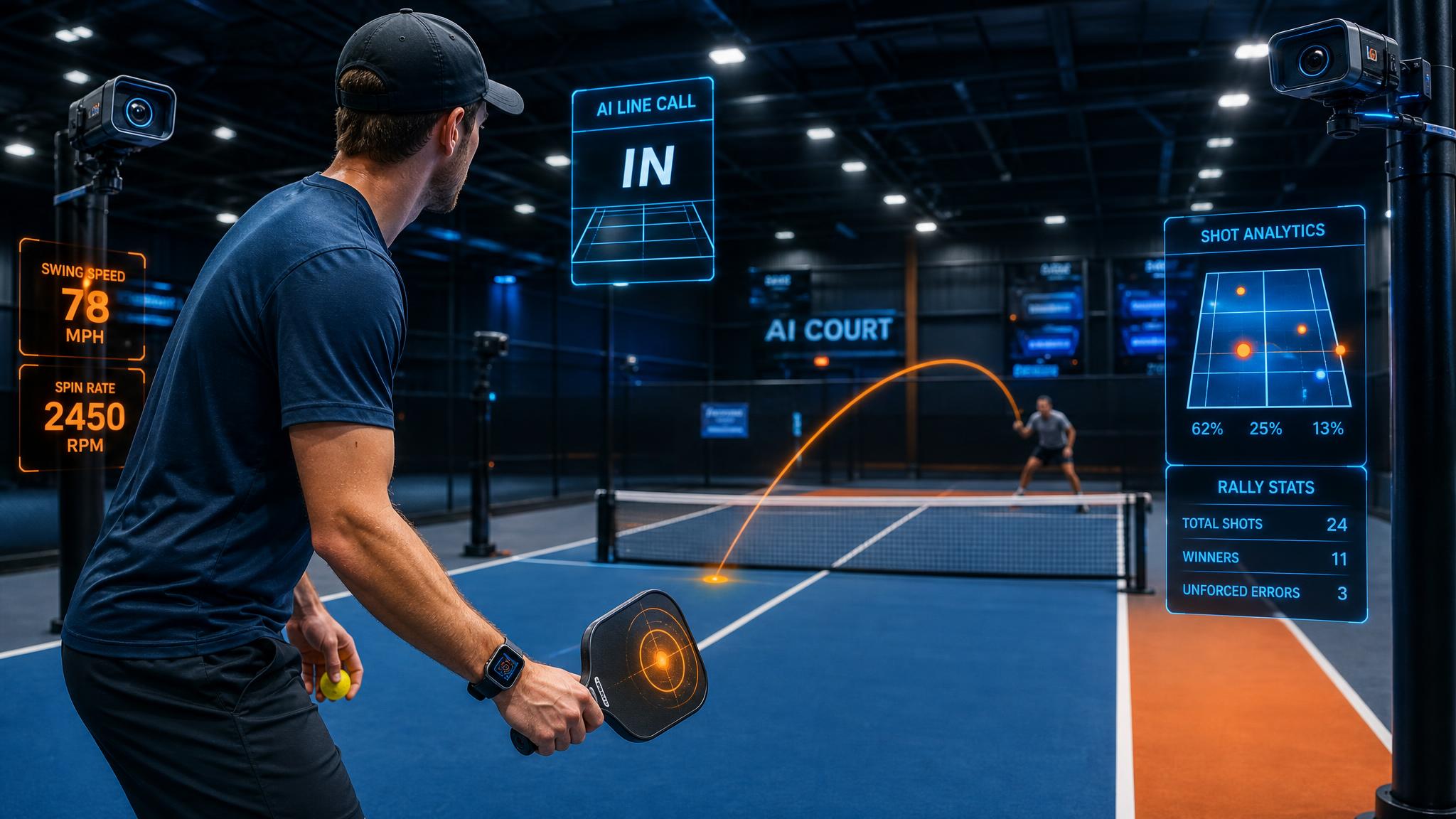
AI-driven line calls and real-time shot analytics are moving from the pro tour toward the community court.
Pickleball's reputation was built on simplicity: a paddle, a plastic ball, and anyone from eight to eighty able to rally within minutes. So it's a quiet irony that the sport is now becoming one of the most instrumented games on the planet. The paddle got smarter. The court got cameras. And in 2026, the technology stopped being a gimmick and started changing how the game is officiated, coached, and played.
AI finally calls the lines
The headline shift of 2026 is electronic line calling driven by AI. Where tennis relied on expensive multi-camera Hawk-Eye installations, pickleball is leapfrogging straight to software. Systems like Owl AI generate in/out calls from 4K video captured on smartphones or broadcast feeds — a fraction of the cost of traditional hardware. Major League Pickleball and the PPA Tour began rolling these out this season, and the implications travel fast: if a reliable call can come from a phone on a tripod, then accurate officiating is no longer reserved for the center court of a major. It can reach a community club in Cebu or Chiang Mai.
The paddle that watches you play
At the player level, the sensor revolution is well underway. Motion sensors that clip to a paddle or wrist now measure swing speed, spin rate, contact point and shot consistency. Smart insoles track footwork and court coverage. Paired with training apps, these tools turn a casual session into a feedback loop — the kind of data that used to require a coach with a clipboard and a very good eye.
The best operators treat this tech as a complement, not a replacement. Sensors are brilliant at telling you what happened. A good coach still tells you why, and what to do about it.
Why this matters more in Asia
There's a reason this wave could land harder in Asia than anywhere else:
- Mobile-first by default. The region's players already live on their phones. Smartphone-based line calling and app-driven coaching fit the behaviour that's already there.
- A coaching shortage. Asia is growing players far faster than it's growing certified coaches. AI-assisted training helps close a gap that would otherwise take a decade to fill.
- Leapfrog economics. Just as the region skipped landlines for mobile, it can skip the expensive officiating era and go straight to software.
The paddle stayed simple. Everything around it got smart.
The risk of a fragmented stack
The opportunity comes with a familiar warning. Each market is adopting different apps, different sensors, and different officiating systems — often set by whichever vendor arrives first with a deal. Left unconnected, Asia risks building thirteen incompatible tech ecosystems for a single sport.
The players building the game here deserve to compare what actually works — which systems are accurate, which apps are worth the subscription, which gear is hype. That conversation shouldn't be gatekept by vendors. It should flow between the people on the courts, in every market.
Help build the bridge.
Players, coaches, venues, brands, tournaments and travel partners across every Asian market are joining as founding partners.
Become a Founding Partner →Pickleball Asia is an independent grassroots community network, distinct from commercial pickleball news publications. Figures reflect publicly reported data as of late 2026.