

The Game · Rules
Game Point, Reconsidered: Pickleball Scoring in 2026
Nothing starts an argument at a pickleball club faster than scoring. In 2026, the sport's oldest rule — score only on your serve — is under more pressure than ever. Here's what's actually changing, and why it matters for Asia.
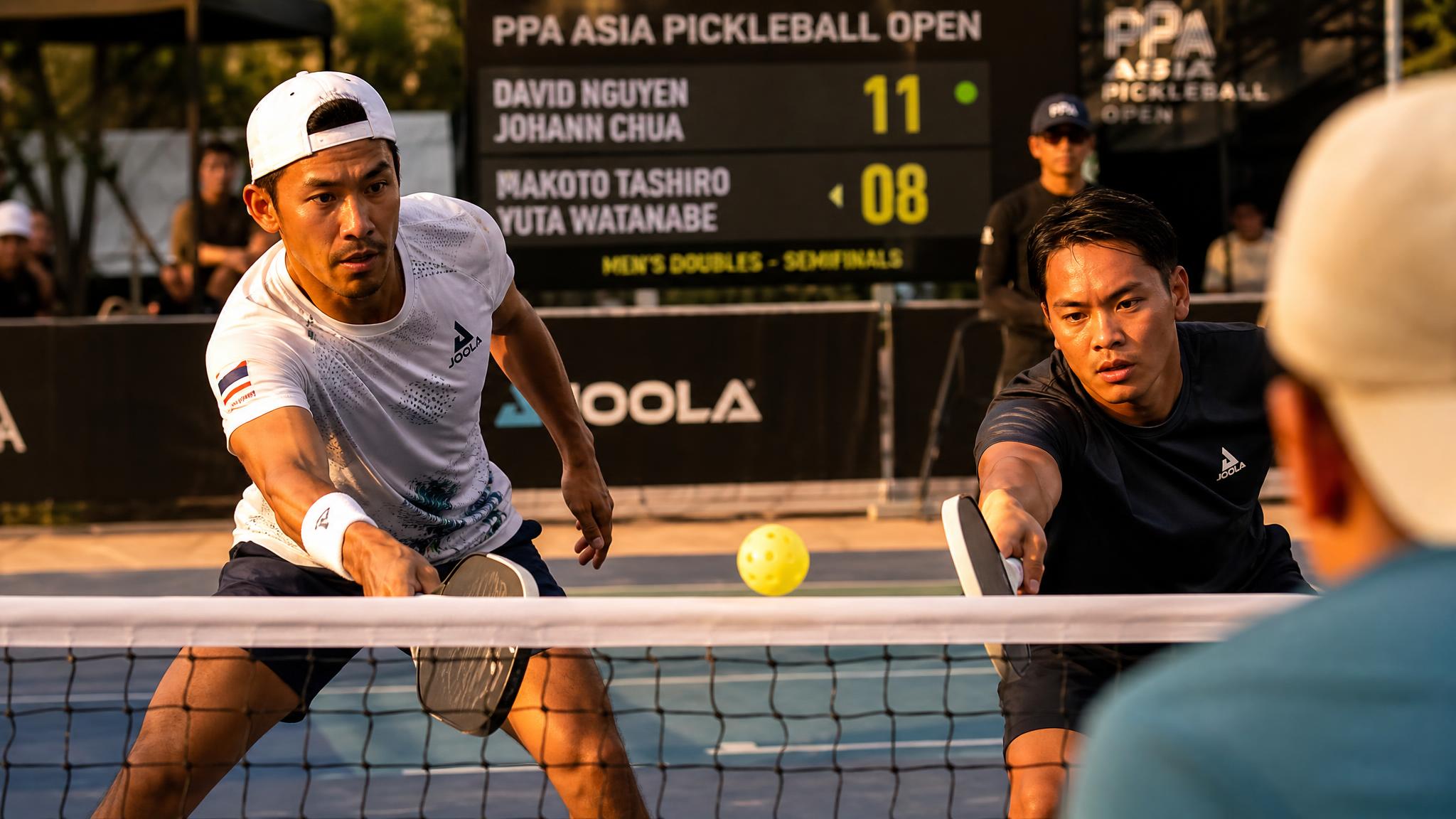
Win by two, to eleven — but who gets to score, and when, is quietly being rewritten across the region.
Few topics divide a pickleball club faster than scoring. For most of the sport's life, the rule was gloriously stubborn: you could only score a point on your own serve. Lose the rally while receiving, and you didn't lose a point — you just lost the serve. It made for long, tactical games and some genuinely baffling first sessions for newcomers. In 2026, that orthodoxy is under more pressure than ever.
The format everyone learns first
Traditional — or side-out — scoring is still the backbone of the sport. Games to 11, win by 2. Only the serving side can score. In doubles, each team gets two server turns (except the very first service turn of the game) before handing the ball over. It rewards patience and discipline, and it's still what most tournaments and most rulebooks default to.
Rally scoring: faster, tidier, controversial
The challenger is rally scoring, borrowed from volleyball and badminton: a point is awarded on every rally, regardless of who served. The appeal is obvious — games finish in a predictable window, which broadcasters and venue schedulers love, and newcomers grasp it instantly. Rally formats are being tested at 11, 15 and 21 points depending on the event.
Through 2026, rally scoring remains in provisional status with USA Pickleball while independent research continues. But one meaningful change did land this year, and it's a good one:
In 2026, the receiving team can finally win the game on the deciding rally — not just the server.
Under the older rally rules, even a match point could only be converted by the serving side, which produced some deeply anticlimactic finishes. Awarding the point on every rally — including the last one — fixes that. It was, fittingly, a change the majority of players asked for.
Why Asia should care about this debate now
This isn't abstract rulebook trivia. The scoring format a market adopts shapes everything downstream — how tournaments are scheduled, how matches are broadcast, how beginners first experience the game. And right now, different Asian markets are quietly standardising on different formats.
- Some leagues favour rally scoring for its TV-friendly predictability.
- Others hold to traditional scoring to stay aligned with international sanctioning.
- Many community clubs simply use whatever the organiser learned first.
None of these choices is wrong. But made in isolation, they create friction the moment a player from one market enters a tournament in another. A shared understanding — not an imposed rule, just a clear picture of what each market does and why — would save a lot of confusion at the net.
The bottom line
Scoring in pickleball is mid-evolution, and that's healthy. Traditional scoring isn't going away; rally scoring isn't a passing fad. For now, the practical advice is simple: know which format you're playing before the first serve, and if you're running events in Asia, be explicit about your choice. Clarity is the courtesy the whole region can afford.
Help build the bridge.
Players, coaches, venues, brands, tournaments and travel partners across every Asian market are joining as founding partners.
Become a Founding Partner →Pickleball Asia is an independent grassroots community network, distinct from commercial pickleball news publications. Figures reflect publicly reported data as of late 2026.