
Policy · Public Space
Who Gets the Court? The Policy Fight Shaping Pickleball Across Asia
Behind every packed pickleball court is a quieter contest: over permits, public space and whose game gets priority. From Singapore to Hong Kong to Tokyo, how Asian cities handle it will decide how far the sport really goes.
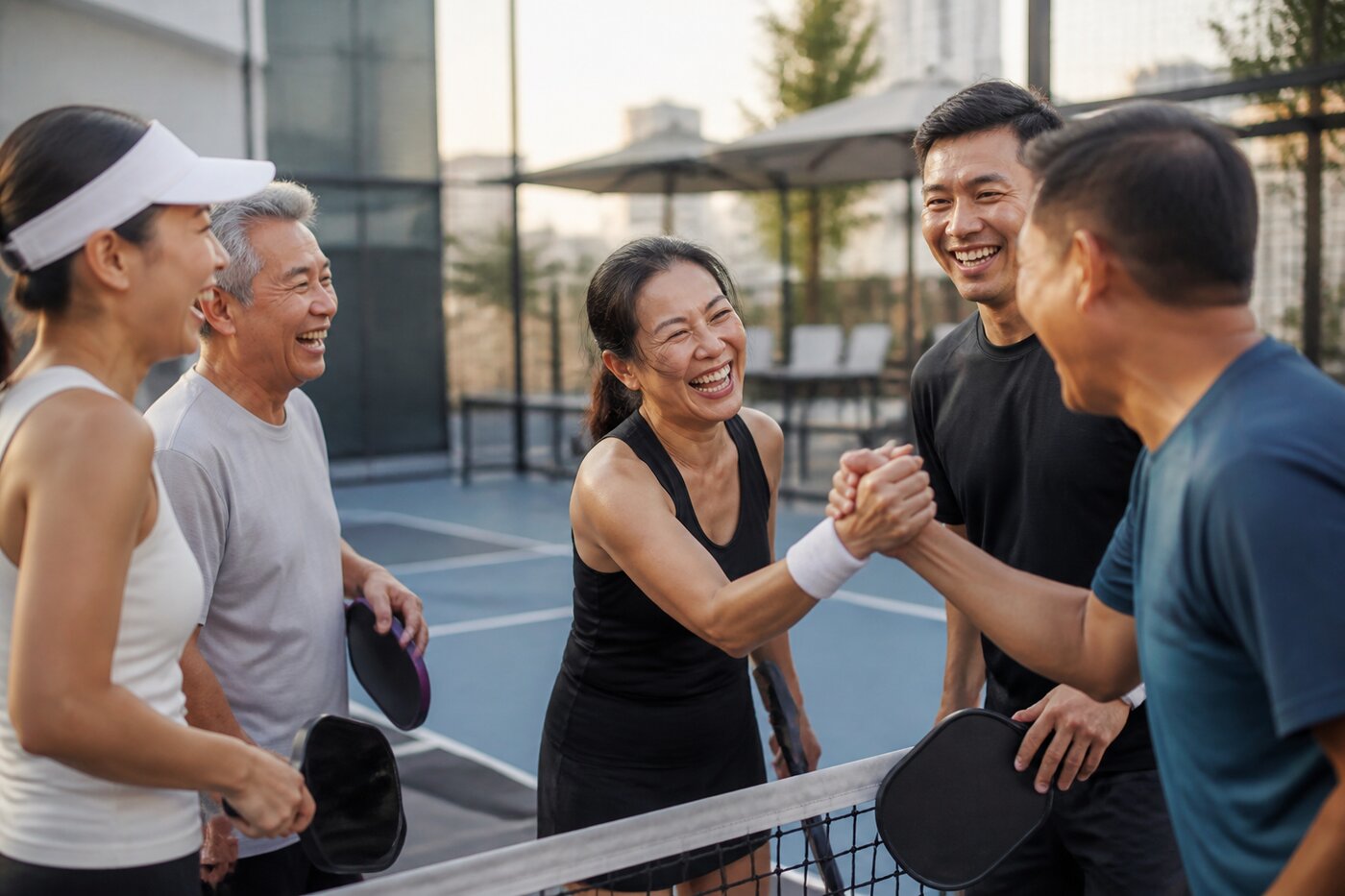
Access, not enthusiasm, is now the limiting factor. The policy choices cities make in 2026 will shape the next decade of the sport.
Pickleball's Asian boom has run into the one thing enthusiasm can't manufacture: space. In dense, land-scarce cities, the sport's growth has collided with tennis clubs, basketball courts, public parks and residential buildings all competing for the same square metres. The result is a policy fight — mostly quiet, occasionally loud — that will shape the game far more than any paddle technology.
The space problem is a policy problem
Where America had suburban tennis courts to convert, much of urban Asia does not. A rooftop in Hong Kong, a void deck in Singapore, a reclaimed lot in Jakarta — each requires navigating permits, noise rules, zoning and competing community claims. The limiting factor on pickleball's growth in most Asian cities is no longer whether people want to play. It's whether a local authority will let a court exist, and under what conditions.
How different markets are responding
- Singapore — a managed, top-down approach: designated public courts, booking systems, and dedicated indoor facilities that keep play organised and neighbours happy.
- Hong Kong — intense demand against extreme space scarcity, pushing players toward rooftops, private clubs and time-shared multi-sport courts.
- Japan & South Korea — measured, standards-conscious adoption, often routed through existing community-sport and school-facility structures.
- Southeast Asia broadly — faster, more bottom-up growth, with private operators and local councils improvising the rules as they go.
The paddle is the same everywhere. The permit is different in every city — and that's what decides who gets to play.
Why a shared view matters
Here's the pattern worth naming: every city is solving this alone. A Singaporean booking model that smooths peak-hour contention, a Hong Kong operator's lease structure for shared courts, a Japanese council's noise-and-hours framework — each is a hard-won answer that could save another city a year of friction. But without a regional vantage point, these lessons stay local, and every market pays tuition on the same mistakes.
This is precisely where a connective, regional reference earns its keep. Not to dictate policy — cities will and should decide their own — but to make the good answers visible across borders, so an organiser in Manila can learn from Singapore, and a council in Bangkok can see what worked in Seoul. The sport's future in Asia will be written in permits and public-space decisions. The least we can do is make sure the people making them aren't working blind.
Building pickleball access in your city?
Get your courts, clubs and programmes on Asia's regional map — and learn from operators solving the same space problem next door.
Join the network →Pickleball Asia is the region's authoritative community network for the sport — maintaining directories of players, coaches and venues across Asia. Reporting reflects publicly available information as of late 2026.